Exploring a hemp based bio-regional economy

Material science, land use planning, visionary futures – a first explorative project. In this systemic design research project (2021-22), we develop foundations for a yet to come much larger program on a hemp based bio-regional economy: we prototype regenerative hemp composite building materials, embedded in regional circularities with a focus on de-carbonizing the Swiss construction sector and incubating systemic change across system boundaries. 

This project has a clear science focus in developing new hemp-based building composites, i.e. load bearing hemp-geopolymer bricks and an insulating and air quality regulating hemp-lime-biochar plaster. We calculate life cycle assessments of such new products and assess the growth potential of industrial hemp in the Swiss mountain scape, with its substitution potential of current, not regenerative forms of land use.
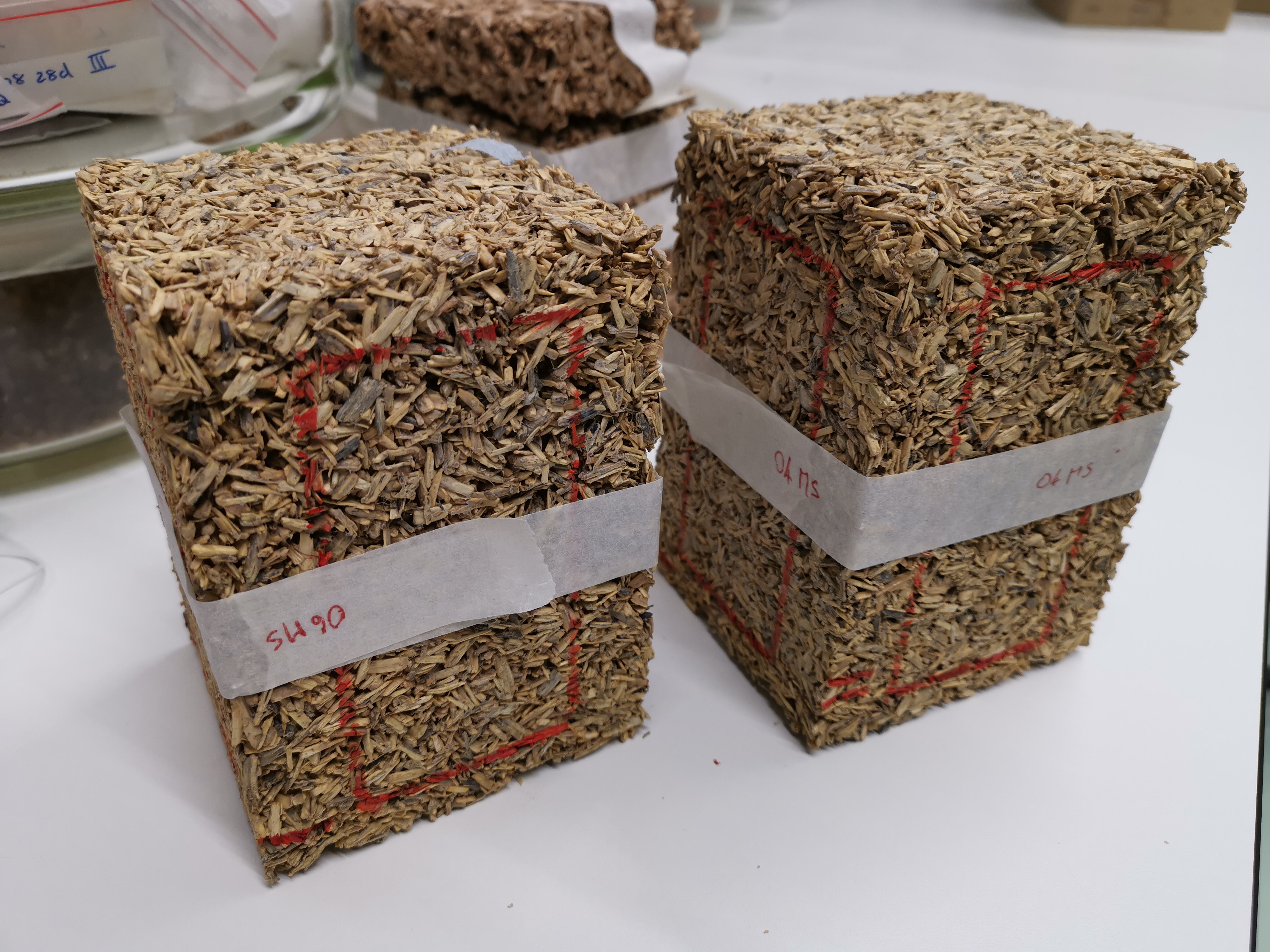
Sampling hemp shives with geopolymer binder

A systemic design perspective is to tap into the synergistic potential of multiple entry points within all hemp related sectors and usage scenarios of the hemp plant. We explore what may create enough leverage to nudge and switch to a hemp-based bio-regional economy in a country like Switzerland, if such leverage points get activated simultaneously. This includes cross-scale governance design from materials to buildings to landscapes and bio-regional economies.

Collaborating with practitioners and testing materials and solution pathways in real-world environments is key for such transdisciplinary, transformative challenges.

Project PI’s: Prof. Dr. Adrienne Grêt-Regamey, Prof. Dr. Guillaume Habert, Prof. Dr. Tobias Luthe. Co-funded by Innosuisse and practice partners Greiner AG (stucko/plaster) and Werner Schoenthaler (hemp bricks).
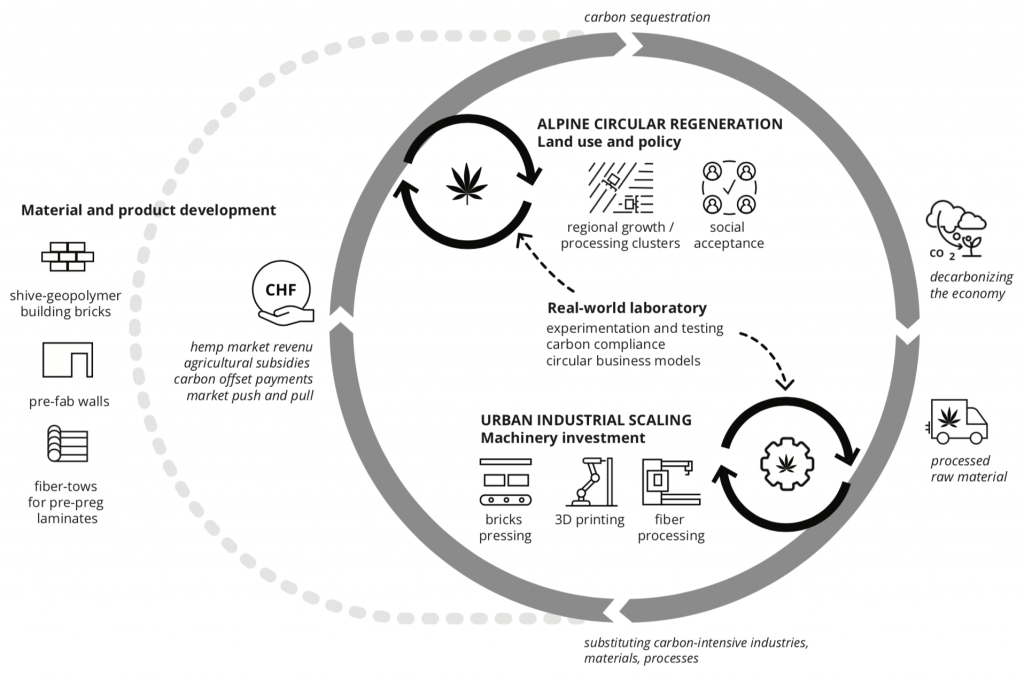
Figure 1. Schematic overview on the proposed circular hemp transition to accelerate the decarbonization of Switzerland

Similar Posts

  • Systemic Cycles

    A cycling journey towards resilient regenerative futures: Systemic Cycles (SC) was protoyped by Martin Schütz and Tobias Luthe of ETH Zurich in 2021, hosted by MonViso Institute, IT. SC currently is both further conceptualized as a Swiss-based research project, and as part of this research practically developed in different bio-regional contexts. cycle-explore-connect-map-weave-transfer-enjoy Systemic Cycles is…

  • Alpine Urban Resilience

    Urban and alpine areas around the globe are socio-economically connected, through the exchange of goods, through tourism, through various up- and downstream cycles -we refer to alpine-urban circularity. Many mountain livelihoods are dependent on the flow of urban populations seeking refuge in nature. Increasing urban heat has driven city dwellers to cooler temperatures at higher elevations….

  • Advancing Systemic Design Methodology

    Our current societal challenges lead to increased complexity and uncertainty. Neither the analytical and descriptive tools of science, nor the iterative doing of design alone are adequate for addressing complex challenges to implement and guide transformative action. Combining both cultures of reasoning and methods as a fluid, solution oriented and synergistic process, is hybrid, and…

  • Updated DRRS MOOC 2: Beyond Systems Thinking

    The 2nd iteration of MOOC#2 entitled “Beyond Systems Thinking” has re-started end of February ’24 on the EdX platform with the six main modules being released one by one. In this MOOC we develop a critical understanding of what systems thinking entails and how it can become a helpful habit. We learn about living systems…